Schwarm

RaR, 2011, Schwarm

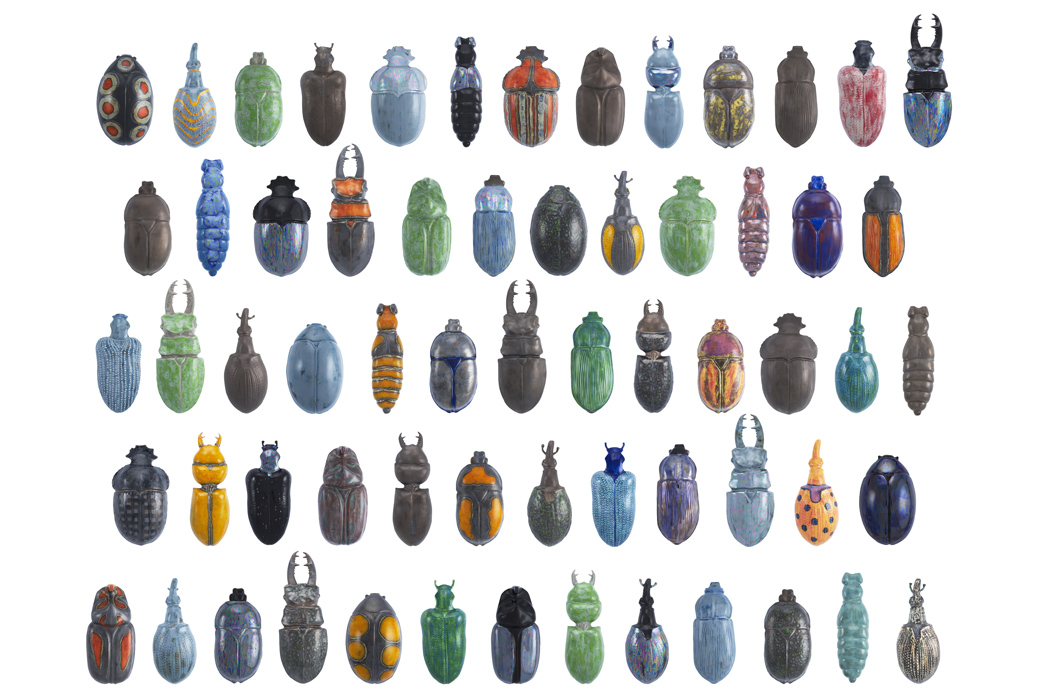
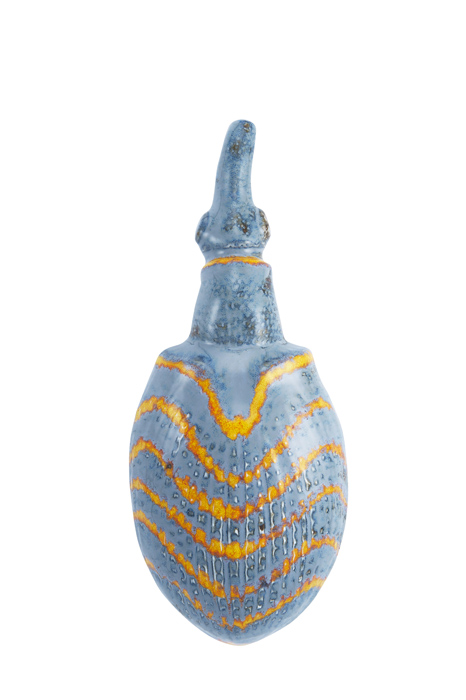
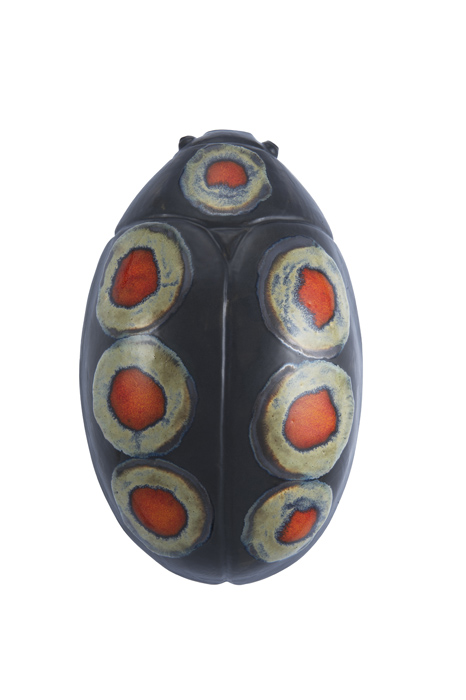
A beautiful array of hanging ceramic beetles created this year by Beate Reinheimer and Ulrike Rehm under the name RaR for design distributor Thomas Eyck. The entire collection was shown at the Milan Furniture Faire.

Schwarm consists of Ten ‘species’ of beetles that were given an impressive variety of glazes, all inspired from the incredible carapaces of coleopterans found worldwide.  Each form has a scientific name that, while perhaps not matching the color, at least corresponds to a real European beetle. I am especially happy of their choices, especially the distinctive Scarites Buparius.

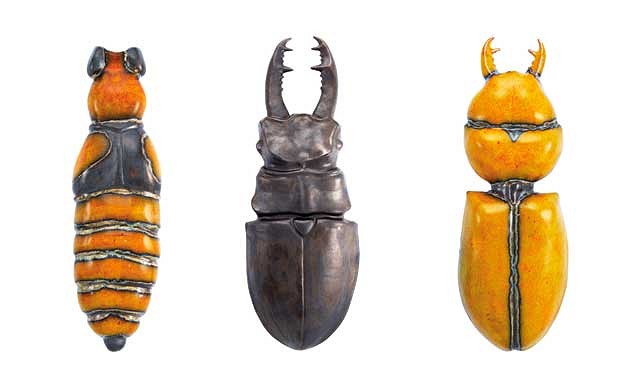
RaR, schwarm, 2011 three

A list of the species types (and their prices) can be found here at thomaseyck.com.

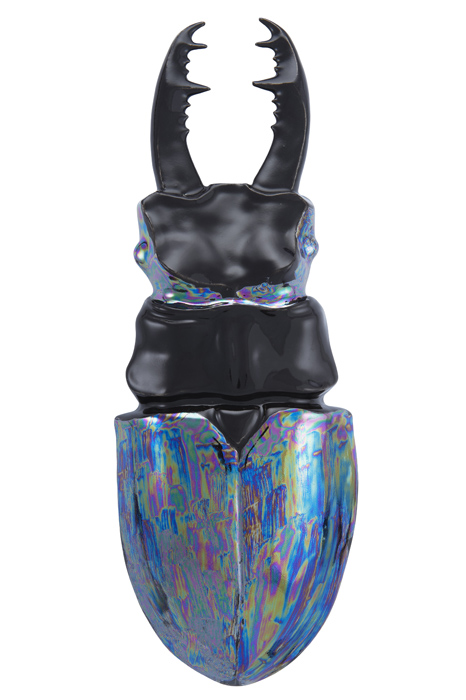
RaR, lucanus cervus, 2011

RaR, Lucanus cervus, 2011

RaR, Apion aeneum, 2011

RaR, Apion aeneum, 2011

RaR, Coccinela, 2011

RaR, Coccinela, 2011


Posted in art | Tagged , , , , , , | Leave a comment

Insects At The Movies: Nausicaä of the Valley of the Wind

For movies in which insects save the day, it doesn’t come more dear to my heart than the animated film Nausicaä of the Valley of the Wind by Hayao Miyazaki, based on his epic concurrent post-apocalyptic manga series.

In 1986, Miyazaki’s film was heavily edited, carelessly redubbed, and its violence and environmental messages dulled and confused for American audiences. The resulting mess called “Warriors of the Wind” was the first Japanese anime film I had ever seen.  And all the brutal alterations by New World Video couldn’t change the core of the film.  Instead of a classic villain, fear and mistrust are the real evils.  The huge and ill-tempered insects, rather than being a nuisance to eradicate, are wise and peaceful entities.

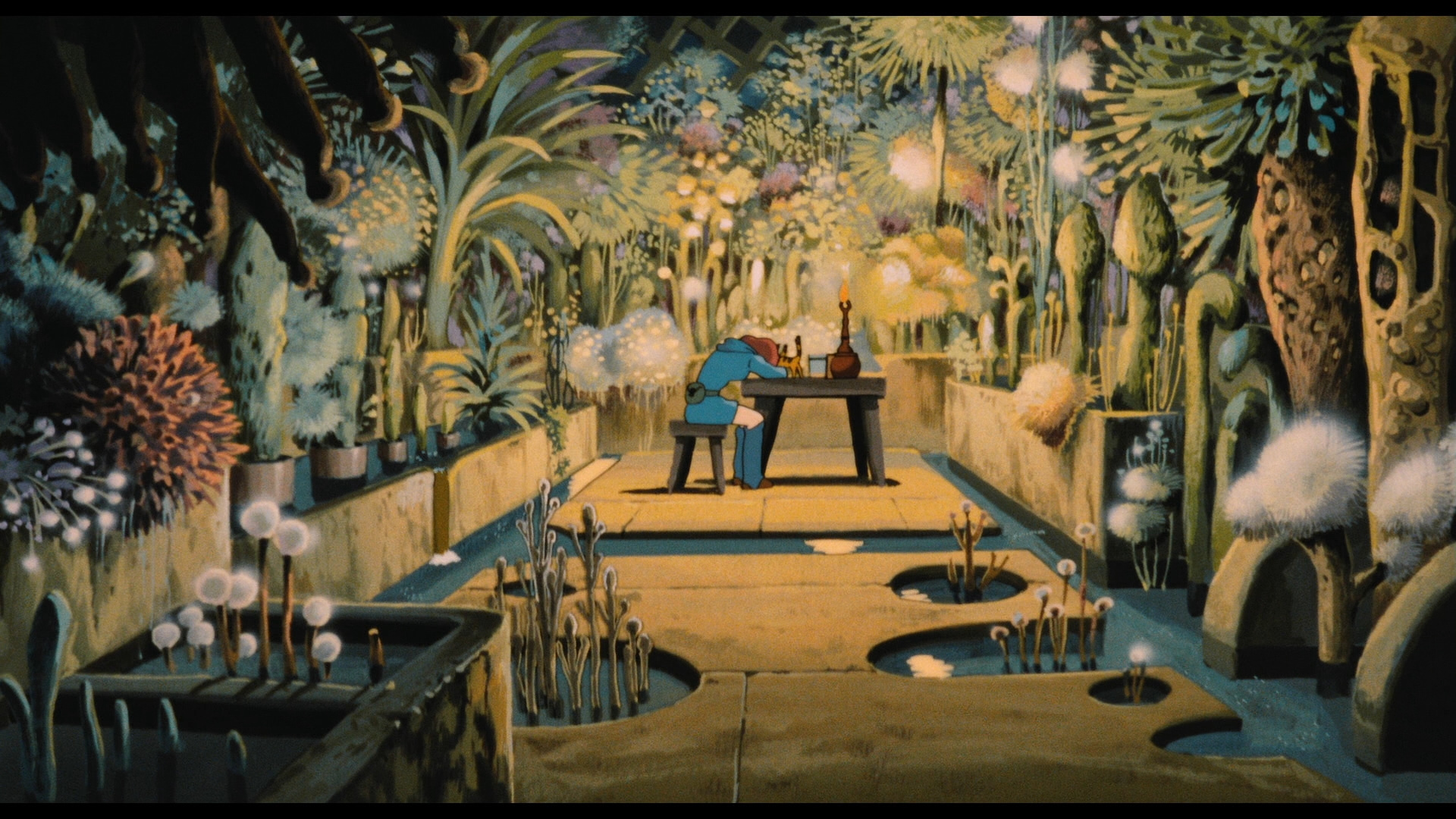
nausicaa royal yanma

I loved this film, and watched it endlessly as a young teen when it aired repeatedly on HBO. It wasn’t until I entered college that I saw the uncut film, carefully subtitled by anime fans in the US. In it, the complexity of the Miyazaki’s environmental message rings clear, as does his faith in humanity and kindness.

Ohmu

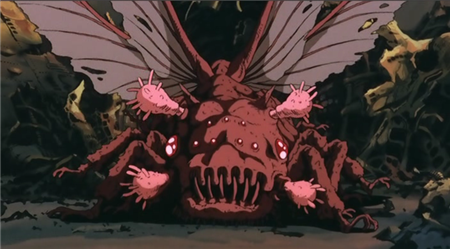
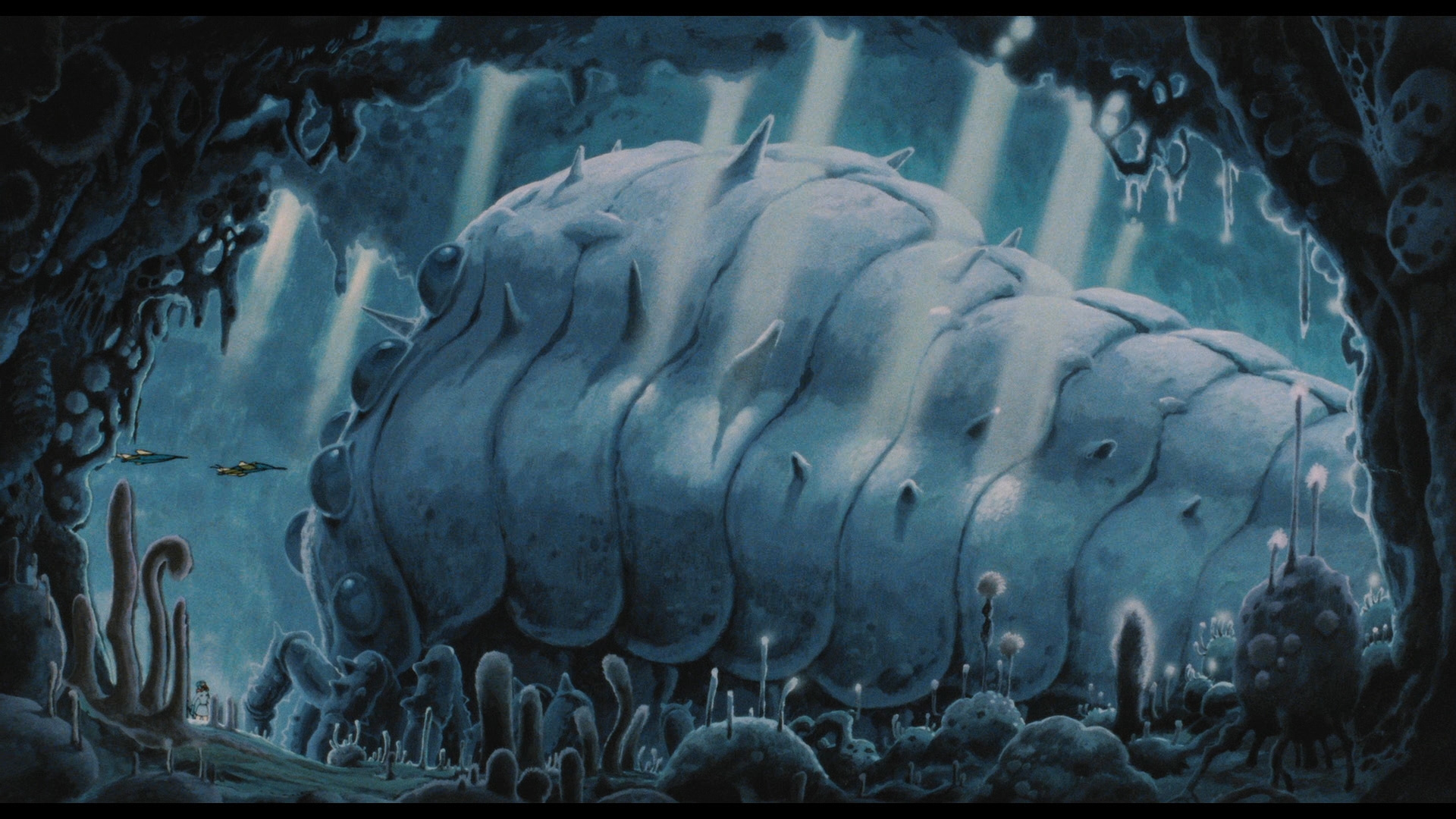
In Nausicaä’s withered world, giant toxic fungus forests are inhabited by Ohmu, huge, enigmatic and powerful arthropods, who are quick to anger, abut also intelligent and caring. We are introduced to them through the eyes of young Princess Nausicaä, who feels nothing but admiration and love for the Ohmu. We quickly find that her respect for live extends to all people and things, even the hordes of insects that live within the deadly and alien jungle that lies next to her kingdom.

One of the subplots excised in the early release was the fact that not only is Nausicaä in love with the forest, she is scientifically interested in it as well, and conducted several experiments to determine the toxic jungle’s origin and function. Through her research, she comes to a painful discovery.  The lethal jungle is in fact a giant filtration device, bioremediating the contaminated remnants of humanity’s world into harmless sand of the course of Millenia.  Humanity’s pride and anger is the ultimate cause of its own ills. The forest, and its insects, are the real stewards of the world.

nausicaa manga

The film is essentially a mere quarter of the events that take place in Miyazaki’s manga, and I cannot recommend the entire series highly enough. The world, its insects, and all the characters are a joy to explore. It has been collected into volumes that are easily accessible for the American audience. The entire series (translated into English) is also found online in its entirety here.

Decades later, Disney aquired the rights to this and many other Miyazaki films, with the caveat that they could not edit a frame of film. Nausicaä of the Valley of the Wind can now be easily watched in both Japanese and English in the States in its original glory. It’s on my shelf, and I still love watching it.

Posted in film, literature | Tagged , , , , | 1 Comment

In Which: I Eat All The Insects

Last night Mrs. Swarm and I visited the Headlands Center for the Arts to take part in a delicious multi-course meal presented by Monica Martinez, owner of  Don Bugito, a new insect-themed food cart in San Francisco.

Mr. Swarm and his helpless insect prey

The Headlands Center is located on the coast of Marin, a reclaimed and renovated building that once comprised part of a large military base, surrounded by acres of restored natural fields and wetlands.  Before the meal we ventured upstairs to hear Martinez and Rosanna Yau of MiniLivestock talk about their methods and philosophy. They explained that their goal wasn’t to shock people with insects, nor were they out to demand that people switch to an insectivorous diet. Even folks in Thailand, who are usually used as an example of cultural entomophagy, don’t eat insects as full meals. They’re seasonal snack food, delicious and plentiful. What they really wanted, they said, was to “open the door” of insect eating to the public, and bring about methods for local and sustainable (and profitable) cultivating of insects as livestock and food.
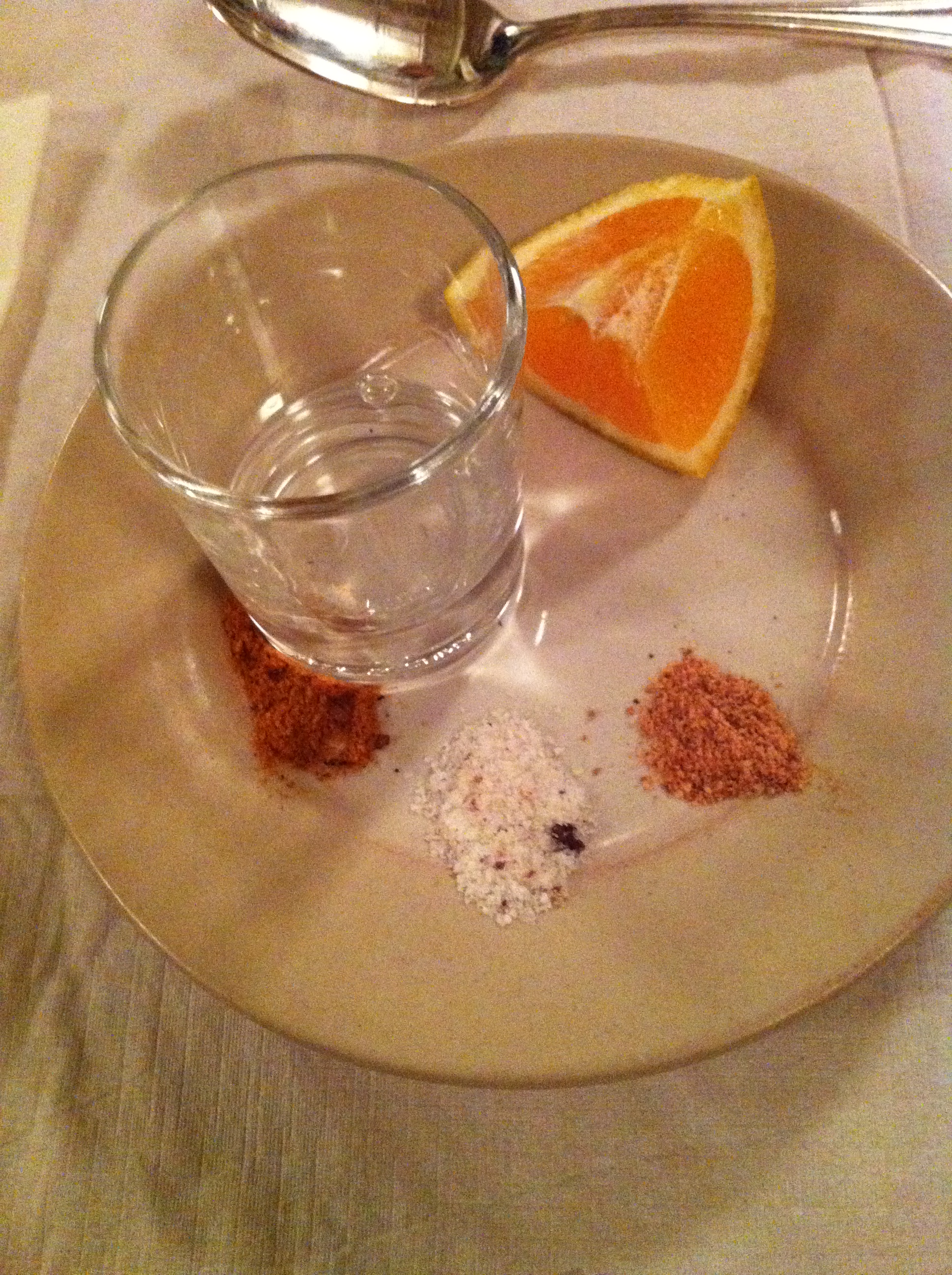
Mezcal and Worm Salt.

Back downstairs, enthusiastic and excited patrons settled down to a shot of mezcal crafted by Factoria de Santos. The glass was surrounded by 3 different types of sal de gusano, also known as worm salt. Sal de gusano is made with salt, chili powder, and the dried and powdered caterpillar of the moth Hypopta agavis, known in Spanish as chilocuiles. These caterpillars are the “worms” often featured in tequila bottles, for they consume the agave plants from which tequila and mezcal is formed. What I assumed was some seasoning or additive to the salt was actually the incredible umami-like flavor of the powdered worm itself- it was absolutely delicious!

Before each dish Martinez did a small presentation, introducing the insect itself, and cultural aspects of the dish and its ingredients. Since entomophagy was primarily a pre-Hispanic custom in Mexico, most of the ingredients had indigenous roots, such as jicama, blue corn tortillas, and amaranth. Many of the insects themselves, when not harvested in California, were indigenous Mexican insects personally brought over through customs by Martinez and her colleagues.

Headlands Don Bugito Menu

One of the Mexican insect delicacies delivered fresh to our table was the first course, Escamoles Beurre Noisette.  Escamoles are the larvae and pupae of the Liometopum ant, often found nesting in agave plants. It was sauteed in brown butter with zucchini and peppers, and set with with avocado and blue corn tortillas.  The white bean-like larvae and pupae had a soft sweet corn taste.

Anahuac Salad with crickets

The next dish was paired with a sweet drink called Tepache, which is made from fermented pineapple.  Alongside this was an “Anahuac Salad”, a small jicama salad filled with sweet potato and toasted pumpkin, peanuts, and crickets. The crickets were dry-roasted as well, and clearly some of the pumpkiny flavor had mingled with theirs. The entire salad was crunchy and delicious, but to my dismay there was only  the faintest sprinkle of crickets on my dish. Indeed, the entire salad had a mere 10 crickets.

In fact, every dish had what I would consider the barest sprinkling of insects. For somebody whose idea of insectivory is “Bag of roasted weaver ants shoved into mouth; repeat!“, this wasn’t much of a chance to really consume mass quantities of insects. At best the insects were a garnish on each plate. I began to worry that some of the dishes were crafted, like the salad and escamoles, to allow the insects to slip into the palate undiscovered. This saddened me somewhat, as it  reinforced the unfortunate fate of insect cuisine as being just another transgressive oddity, to be admired and amused by Americans for an evening, then discarded in favor of cow or chicken. Are we really still too timid for such things, even though we sit down to giant bowls of buttered crab legs?

Sol Corn Custard and Wax Moth Larvae

Several things quickly brought me out of this funk. First was the “Sol Corn Custard” sprinkled with wax moth caterpillars. While the dish wasn’t covered in caterpillars, there was no hiding these insects. The soft corn custard was sweet and surrounded by delicate tomato sauce. On top of it were sprinkled crispy waxworms and cordyceps fungus (the explanation of which was the one event that caused a curious stir in the determined diners). I had never had waxworms before, and I doubt I will have any as delicious as these ever again. Each little critter was roasted to perfection, their intense flavor complementing the gentle custard beneath, and echoed in the thin stick-like toasted cordyceps. And as Mrs. Swarm and I looked around the room to watch assembled diners savoring every single prepared insect dish, I realized that each plate was an artful blend of Mexican cuisine and insect flavors, a light and inventive celebration of insects and human culture. More than a garnish, they were the main stars, surrounded by a tasty supporting cast. Suddenly as if on cue, a mutual beekeeper friend of ours swung by our table, ecstatic that instead of simply mass quanities of worms, we were being served “insects in elegance”. She was also enthused to be finally consuming wax moths, which are a persistent pest of honeybee hives. Eating well is the best revenge!

Shrine to 'San Honesto', the patron Saint of Factoria de Santos

My hope of entomophagical adventure rekindled, it was ready for another truly unique Mexican treat, dry eggs of “lake flies” from the Texcoco Lake in Mexico’s central valley. Actually the eggs of water bugs (hemipterans), these tiny eggs, collected and dried en masse, are known locally as ahuahutle . Consumed since pre-Hispanic times, they are considered to be ‘Mexican caviar’! They had a light oily flavor which was combined with salt, and sprinkled over shoestring potatoes and greens.  Though I am not a fan of shoestring potatoes to serve along insects (reminds me too much of the cricket dish I used to order at my no-longer-favorite insect restaurant Typhoon), it looked beautiful underneath the fried greens. Equally Mexican but far more challenging was the Michelada, a drink that tasted like a beer-based bloody mary, powered by Worcestershire sauce and a boatload of salt.

Carmelized mealworms and ice cream

The final dessert of the evening was a vanilla bean ice cream served with cactus fruit sauce, and amaranth molasses crisp, Mrs. Swarm loved the  carmelized toffee mealworms sprinkled on top, but I felt the bitter mealworm aftertaste seemed to creep up behind the other sweet flavors. Of all the insects I have eaten in my life, mealworms is strangely one of my least favorite, though it is the most common.  This final dish was finished off with a second shot of Factoria mezcal and delicious Mexican chocolate, in a glass that we could take home.

The entire event was a creative success, even if it was a bit light in actual tonnage of insects consumed. I really love eating insects, but what I love even more is learning new cultural entomology and cuisine. The entire event was communicated and presented skillfully by Martinez and her assistants and numerous volunteers in pamphlets, in announcements, but most of all in the food, which really spoke for itself. That education opened doors aplenty.

Posted in cuisine, event | Tagged , , , , , , , , | Leave a comment

San Francisco Eats Insects

Daniella Martin

Daniella Martin and arachnid hors d'ouevre.

While most of the world thinks nothing of eating insects, (indeed, it could be argued that in most of humanity’s history we’ve been eating insects), Europe and the US throw up their hands over their mouths in utter amazement of eating something with an exoskeleton that hasn’t been slurping up corpses on the sea floor. So while I bristle a bit at insect-eating being labeled as the latest “foodie craze”, I’m plenty happy to see a bunch of wonderful articles coming out about insect eating in my neck of the woods.

NPR, SF Gate, and several other news outlets are all pretty much sponging off the well-written and thorough article by Peter Jamison at the SF Weekly. Bug Me: San Francisco Helps Pioneer Insect Cuisine not only highlights local entomovores Daniella Martin and Mónica Martínez, but takes the time to interview nutritionalists, health inspectors, and scientists. Plus the writer puts his mouth where his money is, and samples some home-cooked holometabolous cuisine.

Speaking of sampling, money and mouths, I will be going to the insect food-tasting event tomorrow at Headlands Center for the Arts, with insects and fine mezcal served by none other than Martinez’ Don Bugito! Very excited. Also, very hungry.

Posted in cuisine, event | Tagged , , , , , | Leave a comment

Insects At The Movies: Joe’s Apartment

Often shown as part of MTV’s legendary Liquid Television, John Payson directed this this short film gem in 1992 about poor slob Joe and the thousands of cockroaches he shares an apartment with. It’s great low-budget lunacy, and obviously one of my favorite MTV shorts. Here it is in its entirety:

For some gloriously demented reason, Geffen Pictures decided to give Payson the green light to turn Joe’s Apartment into a feature film years later. While some human-based parts of the movie drag, it’s heaven for anybody who wants to see a swarm of roaches dance, sing, and save the day!
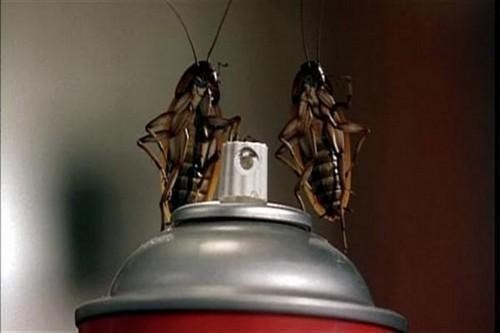
Though Jerry O’Connell does a fine job as comedic naïf Joe, from the opening shot it’s clear that roaches are the real stars of the film. Replacing the stop-motion from the original short are swarms of CGI roaches expertly animated by Blue Sky Productions, as well as 5,000 actual live roaches. This being an MTV movie, the fun-loving roaches are nearly all represented as young males on a nonstop frat party, and everybody plays music. But if you can get past the juvenile boy-humor, it’s worth it to see blattids take center stage, and not merely as objects of disgust (though they revel in that too). The animated roaches act like tiny humans, but they’re entirely anatomically correct, from clypeus to cerci. Here’s the gang performing a little romantic love song for Joe.

Ralph & Rodney, kings of all they survey

There’s some standard plot of an evil senator who wants to destroy the apartment, and his daughter who plays the love interest, or something. But who cares? Back to the blattids! They turn the ruined apartment into a garden and give Joe the deed to the property, all while surfing a drainpipe. And the final gospel number when they reach the ‘promised land’ of the ultimate apartment, just has to be seen to be believed. Rare and brave is the movie that has a happy young couple making out amidst a sea of skittering roaches.

One final note: back in 1996 when the film came out, I remembered an anecdote that the American Humane Association was on hand to assure the safe treatment of all 5,000 of the live cockroach co-stars.  Sure enough, I recently found this review of the movie on the AHA website database, detailing some of the film’s use of animal slight-of-hand, along with lovely stories of O’Connell pulling live roaches out of his mouth when the cameras stopped rolling. That’s some serious dedication to cockroach welfare.

Posted in film | Tagged , , , | Leave a comment

Insects At The Movies: Phenomena (aka Creepers)

It’s time for another insect horror movie, and this is one where the insects not only win in the end, but they do the bidding of Jennifer Connelly!

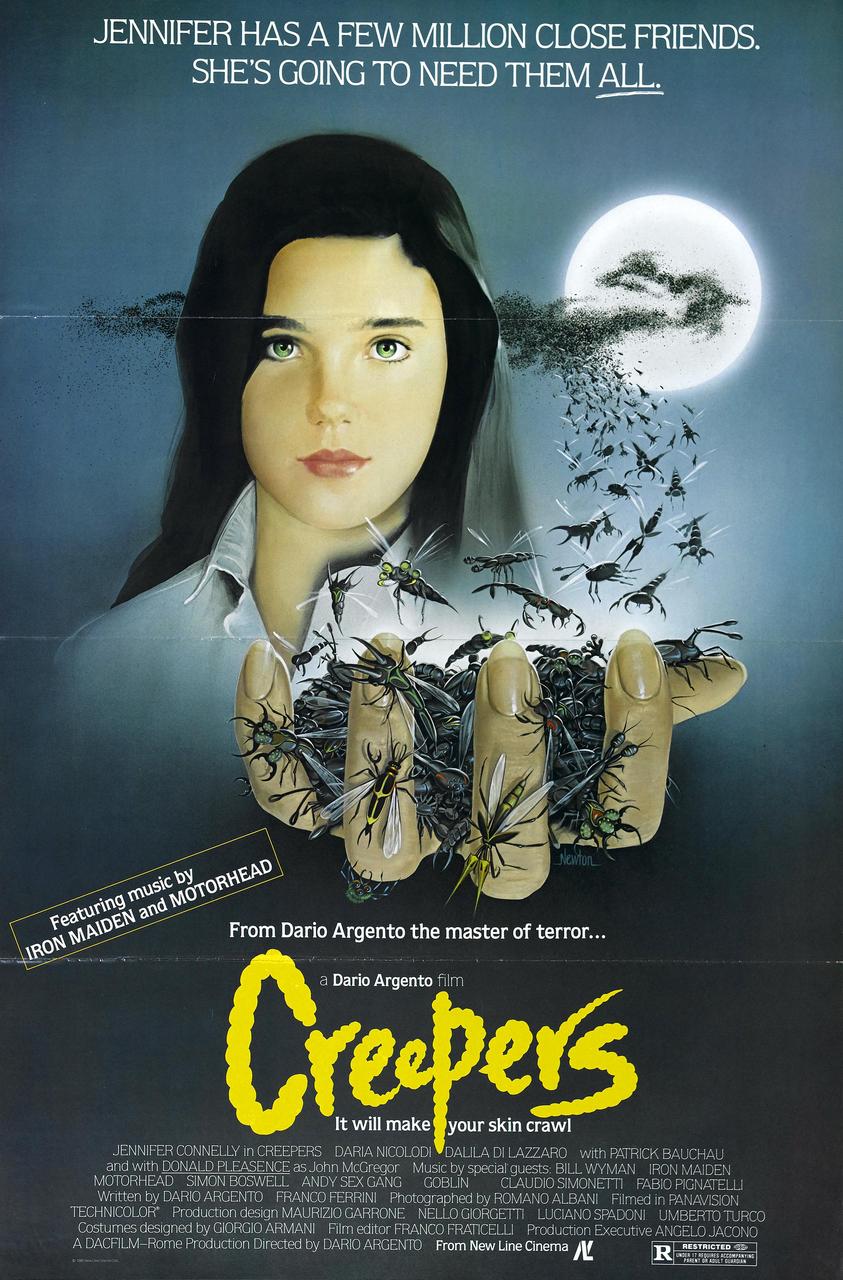
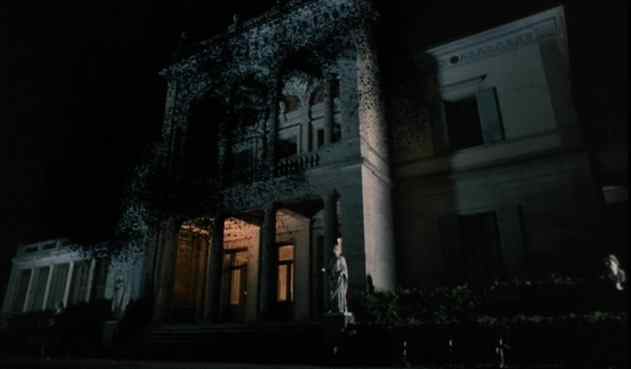
PHENOMENA (1985 aka “Creepers” in the US ) was made by Italian director Dario Argento, and is chock-full of gore, decapitations, murdering psychos, and thousands and thousands of insects. Connelly plays a young transfer student who discovers that her love of insects has turned into a psychic power, which allows her to track down the culprit of several gruesome murders. If you can stomach buckets of gore, (I really cannot), and an utterly batshit insane plot, all scored with industrial metal music, than perhaps this should be your scary-movie selection.

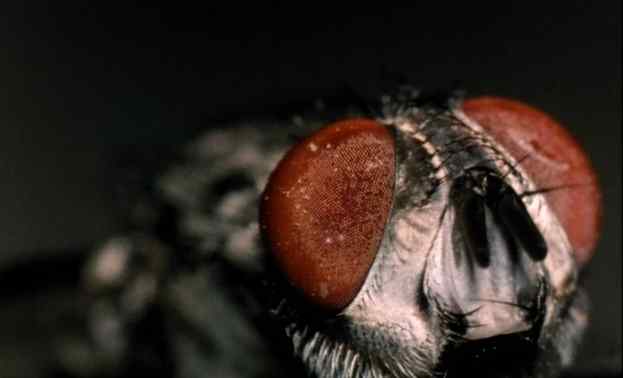
Corpse Fly Cam

Corpse Fly Cam

This is a rather unique horror film, not the least because it features a young woman in a slasher film who is totally unafraid of insects.  And we’re not talking about the cute ones either. Much of the film is dedicated to her studying the extent of her insect-communication powers with the aid of an entomologist played by Donald Pleasance.

“I was alone, in the dark, needed help. It was as though the firefly heard me and answered my call.”  Pleasance lays down some crazy pseudo-science to explain the insect telepathy, but also gives the audience a solid primer on forensic entomology.

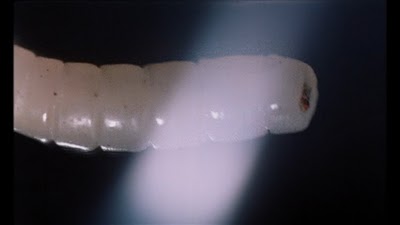
Maggot Cam

Yes, it's Maggot Cam

Connelly is able to find the murdered victims, because “Great Sarcophagus Flies” (aka flesh-flies) are often among the first to land on a corpse, and she can see what they see. To which I should add that not only are there flesh-fly POV sequences in this film, but ladybug and even maggot POVs as well.  But before we get comfy, let me tell you there are a lot of maggots in this movie, pools of them, along with lots of corpses, decapitations, and razor-wielding chimps. So caveat entomologia emptor.

sarcophagus fly

The Great Sarcophagus Fly, still from Phenomena

But unlike so many other movies, these Sarcophagus Flies , as well as other insects, are always on the lookout to help our hero.  In one of my favorite scenes, Connelly is being mercilessly taunted by a group of other girls in her boarding school, who have singled her out as a freak. Smiling, she looks out above them and declares, “I love you all.”  but it becomes clear that she’s not talking to the girls, but to the angry masses of flies and bees swarming outside the windows of the school, ready to rush to her aid.

Jennifer Connelly Fan Club

Jennifer Connelly Fan Club Meeting

flyswarm

Feel the love

Really, doesn’t everybody want a swarm of insects to take care of their schoolyard bullies?

Speaking of swarms, take another look at the awesome poster above- dig the groovy two- and three-headed insects she’s holding in her hand! Sadly, those don’t make it into the picture. But the movie is chock-full of beetles, bees, flies, and oh so many writhing larvae.

Posted in film, wtf | Tagged , , , , , , | Leave a comment

Insects At The Movies: Mimic

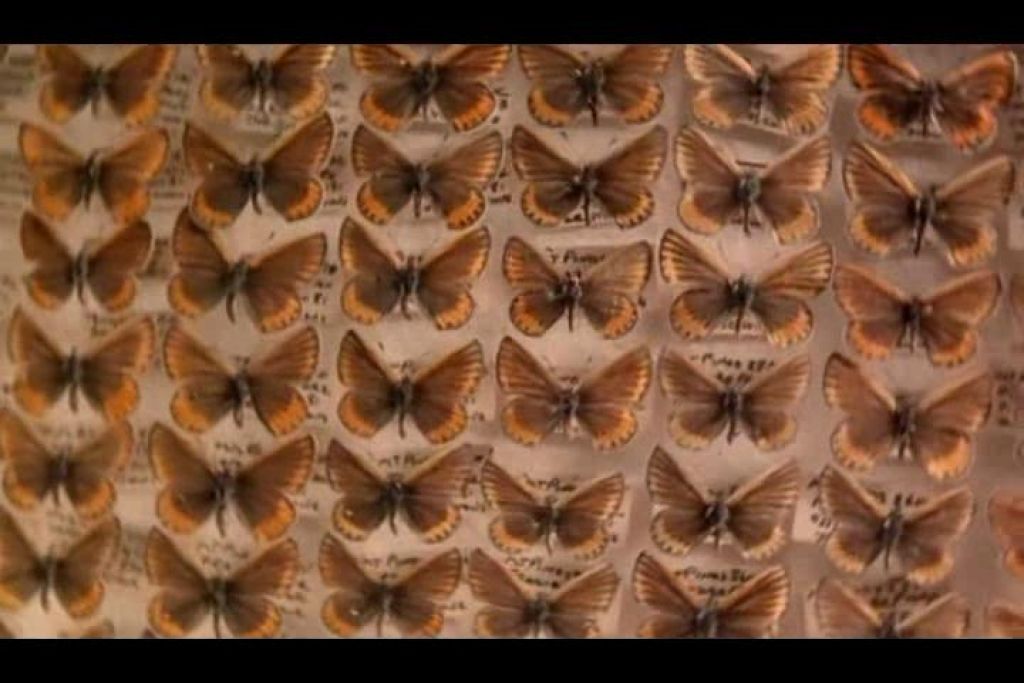
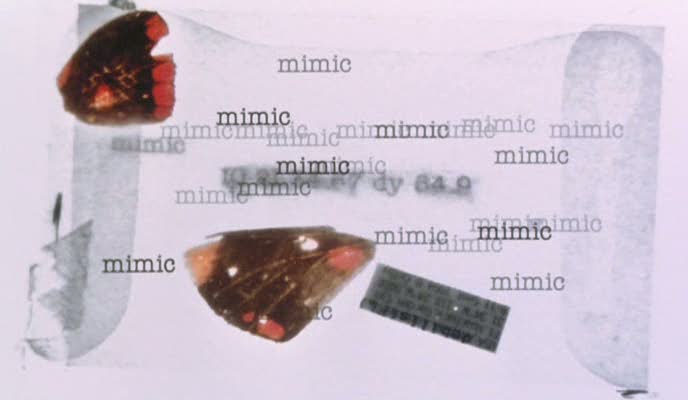
Despite it being a rather standard and predictable genre movie in many ways, Guillermo del Toro’s  MIMIC (1997) gives us giant human-mimicking cockroaches, a splendid combination of practical and CGI insect goodness. While diagrams of the “Judas Breed” anatomy are sadly hard to come by, instead I present to you the beautiful entomology-laden opening title sequence from the film, crafted by legendary designer Kyle Cooper. It’s absolutely breathtaking, creepy, and provides a narrative to the rest of the film

Sadly, the insects don’t win in the end of this one, (though several sequels were spawned, so perhaps they didn’t do too badly) and the film take some breathtaking liberties with entomology. At least the genes from termites and praying mantids that are spliced into the “judas breed” cockroach all come from the same branch of insects, the Dictyoptera. So at least somebody was paying attention! But I will gladly give the ignorance of natural selection mechanics a pass,  if that means I get to see giant cockroaches disguise themselves as rain-coat suited gentlemen just so they can get a meal. Clakclackclak clacketyCHOMP.


Posted in film | Tagged , , , , , , | 1 Comment

Insects At The Movies: Phase IV

Saul Bass! Crazy geometric title sequences! Indelible brands! Bold colors and blocked shapes and crazy animation! Can you imagine what an entire movie directed by him would be like?

Strangely, instead of a snappy title sequence, we start out Phase IV with some bad narration and a trip through the desert. But in short order we get a look at the real stars of this movie: Ants!

Super-Intelligent Ant from Phase IV

Super-intelligent ant from Phase IV

Oodles of ants, all kinds of species, (and even some hawk wasps acting as super-mutated ant queens) photographed in stylish crystalline backgrounds, and custom-made tunnels. Instead of giants, these are ordinary-sized ants, but for all their tiny size they accomplish something rare in the genre of insect-movie… They Win.

Phase IV

Foolish human!

Instead of a straight-up invasion horror film, Phase IV is a surreal experimental science fiction film that brings a foreboding sense of doom for humanity when confronted with an unstoppable force. A couple of scientists are investigating what appear to be intelligent ants in the American Southwest, curiously the same geographical region Them! was set in. Sadly the humans are a pain to watch. Saul Bass can’t direct people worth a darn, and the acting of the humans is wooden, unsympathetic, and slow.  But you’re not here to root for the humans. It is the incredible direction of the ants that is worth all your time. Without any dialogue or voice over, Saul Bass and Ken Middleham manage to convey a sense of purpose and intelligence to the tiny actors as they battle the panicked humans. A more in-depth review of the movie describes my favorite scene:

“In one wonderful sequence, the ants conduct a chain of self-sacrifice, dragging a piece of poison back to their lair, a new ant joining the line as each one keels over and dies in turn. This remarkable feat is aimed at immunizing the colony’s queen, allowing her to produce new offspring who are resistant to the poison — the science is certainly shaky, to say the least, but the scene is no less eye-catching for the way it dramatizes the emotions and spirit of these expressionless creatures.”

Phase IV

Super-Intelligent Ant from Phase IV

The film is creepy and random, and chock full of such creative entomological cinematography. And as a super bonus, there is no human victory. The ants build beautiful alien towers that dwarf the scientists’ facility, and clearly it is only a matter of time before they will take over the world.

Phase IV

Yup, you're screwed.

I for one welcome our new ant overlords!

Posted in film | Tagged , , , , | Leave a comment

Insects At The Movies: THEM!

In honor of my favorite month, it’s time to go through my favorite insect movies. Gleefully, most of these contain Insects and Inverts Of Unusual Size.

Let’s start with the best, shall we? No matter if your list is Giant Bugs In Movies, Insect Horror Films, 50’s Drive-In Flicks, or even Golden Age Hollywood Science Fiction, one film in particular will always float to the top faster than a swarm of fire ants, and that’s a fact…

Them! 1954

This happy little tyke is from the opening scene of Them! (1954), one of the first and unarguably the best of the American atomic-age giant monster movies, a grim noir horror mystery that never devolved into camp or silliness. It treated its monsters seriously, and the scoring remains suspenseful throughout. But the real win is the ants themselves. They’re not stop-motion, rear-projection, forced-perspective, or any trick like that. They’re freaky-huge physical in-camera monsters, and that plus their bird-loop twitter cries give me the chills to this day.

Them!, 1954 billboard

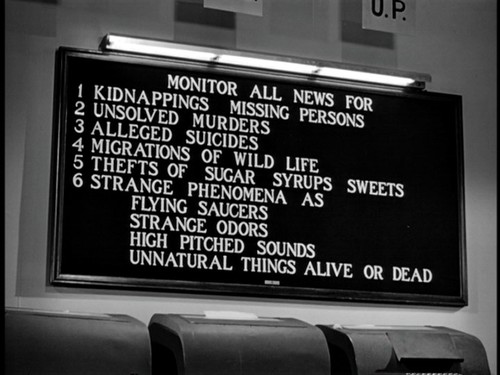
I would love to post this on a billboard somewhere.. UNNATURAL THINGS ALIVE OR DEAD.

Incidentally, I just learned that the fellow in the above scene is none other than a very young Leonard Nimoy!

Ant Larvae

"Burn it! Burn Everything!"

“The antennae! Shoot the antennae!”

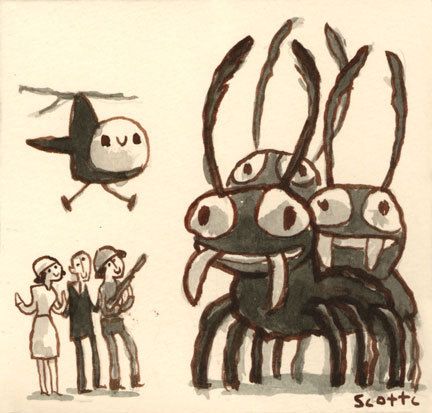
"Shoot the Antennae!" by Scott C.

Halfway through the film, the older entomologist Dr. Medford gives a short lecture on ant biology to the assembled military brass, as well as the audience. Along with snappy charts, everybody takes time to watch a wonderful educational mini-filmstrip, with Medford narrating. The footage is quite good, and I would love to know where the shots came from.  Them Is otherwise wonderfully short on stock footage, something that plagues many other science fiction films at the time. One of my favorite ento-touches is that the giant ants are instantly identified by Drs. Medford as being none other than Camponotus vicinus, a carpenter ant found in the American Southwest.

Camponotus vicinus and its natural prey, a policeman.

I hope to post some more good scary bug-movies this month!

Posted in film | Tagged , , , , | Leave a comment

Araneus diadematus invasius!

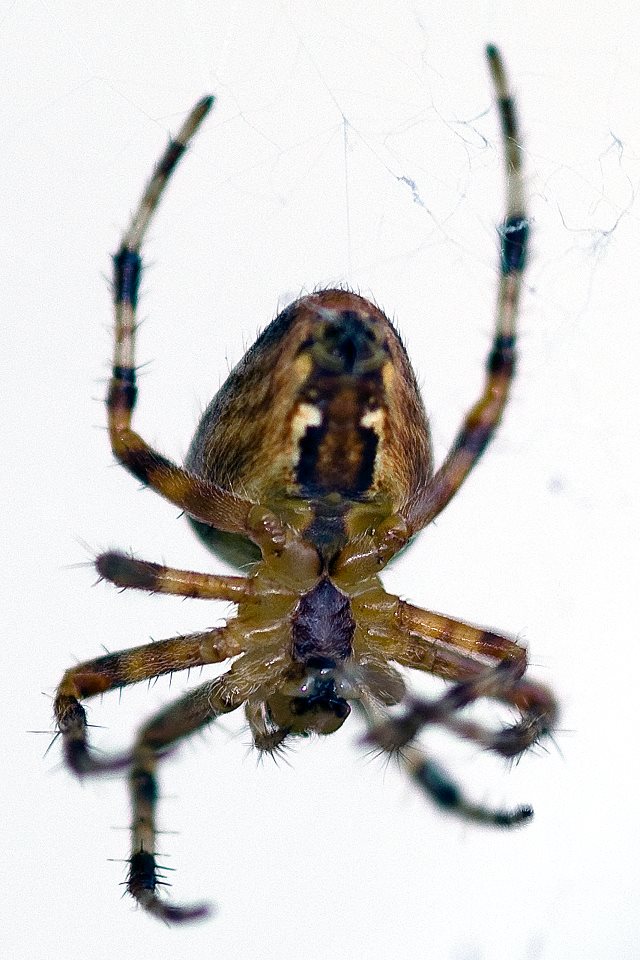
Araneus diademata, 2011, by Doug Swam

Araneus diademata, 2011, by Doug Swam

Here in the Bay Area, we have very few really large insects.  Aside from Jerusalem crickets, most insects and spiders here are small and scarce. But in September and October, the weather heats up, and beautiful huge orb weavers appear out of nowhere, and get big. They are the heralds of Autumn known as Araneus diadematus.

Araneus is actually not a native spider, but an import from Europe, where they are very common. While they aren’t considered invasive, they certainly seem to be everywhere, making gigantic sturdy orb webs over doorways, backyard paths, and gardens overnight.  There aren’t really any Argiope or Nephila spiders like in the rest of the country, so people are rather shocked to suddenly be faceplanting into giant webs every morning. And I get calls every year from people curious or freaked out about them. I have certainly manage to run into one at least once a day so far this month. I don’t feel too bad though, as they rebuild them quite quickly.

Araneus diademata, 2011, by Doug Swam

Araneus diademata, 2011, by Doug Swam

Araneus isn’t at all aggressive, and its venom, if it ever does bite, is rather inconsequential. Mostly they’re just large and in-your-face with their arachnidal corpulence, great thimble-sized beasts that impudently hang suspended in the centers of huge classic webs that can reach over 5 feet. Invariably the ones in my back yard are snacking on some hapless honeybee or crane fly. If you look nearby you can find the tiny males building webs nearby, or testing the webs to see if they can get lucky. Though many folks just call them “garden orb weavers” or the like, I recently heard that some folks instead call them “pumpkin spiders”, which is wonderfully celebratory for such a distinguished spider. They arrive without fail every October heralding Halloween, and most are shaped like exotic autumn gourds themselves!

"Be happy you're not this bee", 2011, by Doug Swam

"Be happy you're not this bee", 2011, by Doug Swam

Here’s a few wonderful macro photos taken by my friend Doug Swam, who shares my appreciation for these Great Ladies. Too bad they can’t stick around all year.

Posted in spider | Tagged , , , | 1 Comment