Sing a Song for Stenopelmatus

Happy Birthday to me! In celebration, I want to share with you all a very special friend of mine, a beautiful and noble beast who is tragically loathed and feared by nearly everybody I know, even friends who otherwise love invertebrates.

But first a word about why.

Growing up in suburban Los Angeles, rarely does one come upon a great number of large or interesting insects. The worked-over sprawl has mostly relegated most invertebrate diversity to areas where the desert still holds sway. Growing up in biological wasteland, it is easy to see why suddenly coming across a giant creature in your garden can be an unwelcome shock.  Nearly every kid in Southern California who had to clean their pool has come in contact with the carcasses of these giant insect monsters that have stumbled over the edge and drowned. For decades I have encountered friends,  acquaintances, and outright strangers who have run to inform me about the disgusting and terrible monster bug that they recently saw, and how it scarred them for life. Before they can go into its description, I would usually cut them off mid-sentence and say,

“Does it have a large bald head, fat stripey abdomen, translucent skin and spiney legs?”

YES! How.. how did you know!?” They’d gasp. Of course, what else could it be, I would think glumly to myself. For no other invertebrate, no invasive ecology-killing species, disease vector, crop pest or venomous predator in all of this region inspires as much vindictive dread in the Western United States as the distinctive and regal creature shown below.
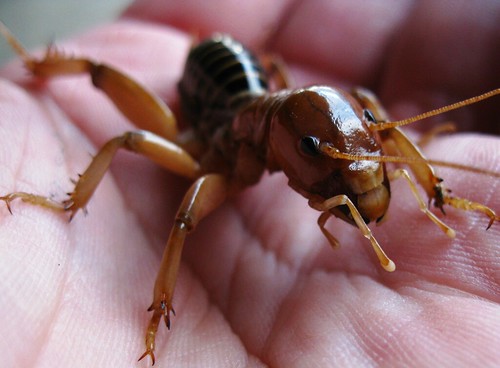
Stenopelmatus fuscus. Photo by John Scharpen

Stenopelmatus fuscus. Photo by John Scharpen

I just don’t get it.

I can see how some people fear ticks, spiders, ants, snakes… but these guys? With their cute sanrio-style faces and brilliant stripes? Their admirably sculpted legs and slow dumply movements? Honestly, they’re like the golden retrievers of the insect world. Big, slow and kinda goofy, but essentially lovable.

And boy do I love them. If there was ever a workhorse emissary of the Endless Swarm, it would be the Jerusalem Cricket.
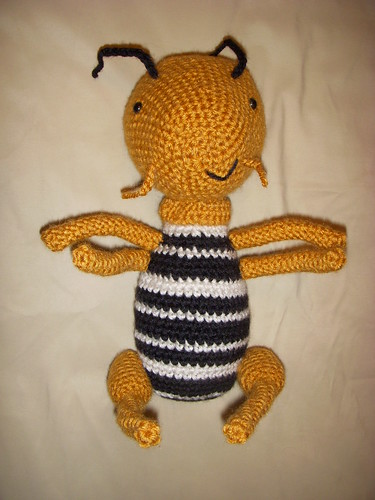
The Sum of All Your Fears by Maggie Keith

Adorable ‘Potato Bug’  by Maggie Keith!

Jerusalem crickets hail from the same branch of Orthopterans as those freaky-big carrot-eating Giant Wetas in New Zealand, the Stenopelmatoidea. (However unlike New Zealand, nobody has named an Oscar Award-Winning Visual Effects Company after the Jerusalem cricket.) They range in much of the Western United States though Central America, but are seldom seen because they usually burrow underneath the earth, looking for tasty decayed roots to nibble on. Digging, gardening, floods, or the hunt for a mate often sends them aboveground, often at night, where they fall into the aforementioned swimming pools and sink like leggy stones.

The name Jerusalem cricket is itself interesting, as nobody is really sure where or why it was given such a strange moniker. Over at the California Academy of Sciences, David Weissman has written a wonderful paper on the possible origins of the name.  I love his suggestion that instead of some arcane religious association, it was very possibly a exclamation of surprise! “Jerusalem, what a cricket!” In fact, what we call the Jerusalem Cricket is just one name of many. There are countless indigenous names for Stenopelmatids, such as niña de la tierra (Child of the Earth) in Spanish, c’os bic’ic lici (Red-Skull Bug) in Navajo, and qalatötö (Shiny Bug) in Hopi.
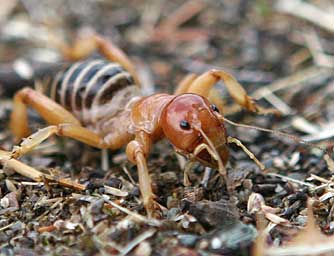
Sure it’s creepy to see an Alien Thing in the bottom of your Jacuzzi. But are we really that afraid of this guy? Come On!

They aren’t venomous, poisonous, or even belligerent, though they can deliver a mean pinch with their root-sawing mandibles. Ive certainly held plenty over the years and never gotten a bite. They’re a favorite food of coyotes, foxes, and owls. I’ve never heard of any humans consuming them for food, but they do look nutritious, don’t they?

They even come in other colors. Here’s a beautiful image of the Kelso  Jerusalem Cricket, which is listed as a threatened species in Point Conception:
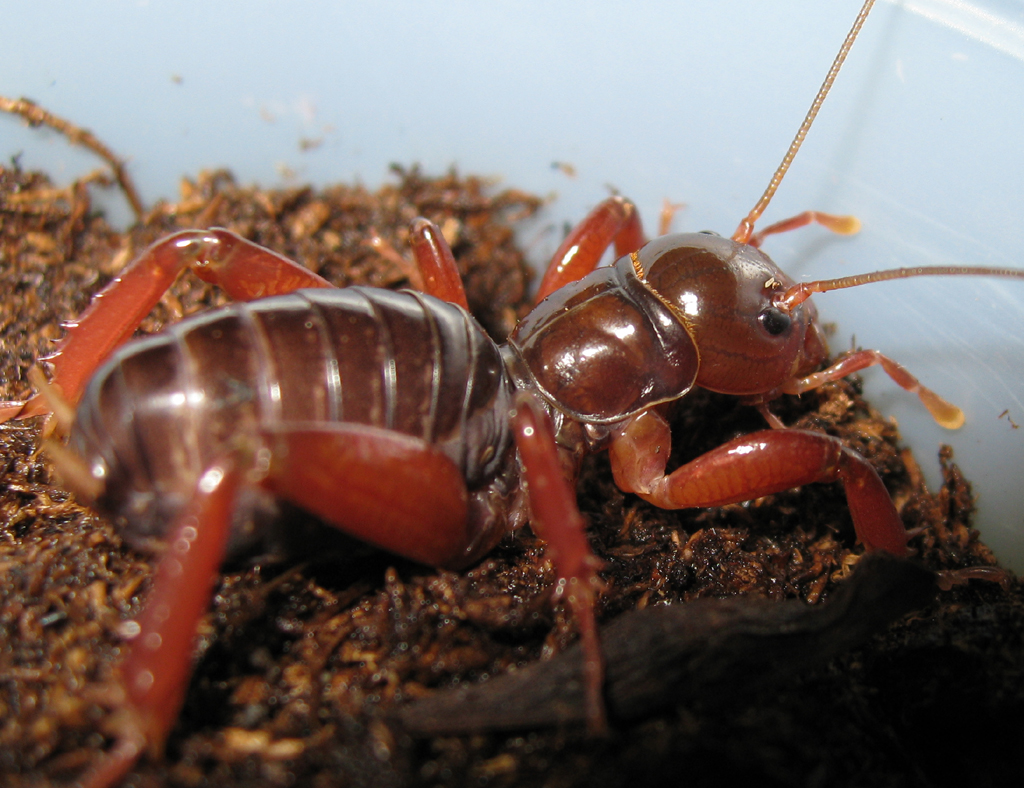
Ammopelmatus kelsoensis

The very regal Ammopelmatus kelsoensis. Photo by Jacob Kalichman

I mean, just get a load of that thorax! It’s like it was carved out of rare mahogany! And speaking of carving, or any art in general, that’s one place where the Jerusalem cricket really stands out. Or rather, stands underground.

Because there isn’t a lot of artwork celebrating the Jerusalem cricket. No sculptures, statues, paintings, suncatchers, kid’s books, anything. At least none that I can find in any frequency. But there is one glorious exception, and its name is Susöpa, the Cricket Katsina of the Hopi.

Susöpa is a Hopi Katsina spirit, part of a larger body of beings that are often called Kachinas. Known as a runner who challenges young males to sprints, Susöpa is often depicted with grass and feather antennae surrounding a round dome decorated with wide dot-like eyes that mimic the Jerusalem cricket’s giant bald head. I found a lovely article published in American Entomologist by John Stoffolono and Barton Wright that delves into the biology of the Jerusalem cricket, and its influence on Hopi culture, and the various depictions of Susöpa by Hopi artisans. Check it out:  Sösööpa—Jerusalem Cricket: An Important Insect in the Hopi Katsina Pantheon.
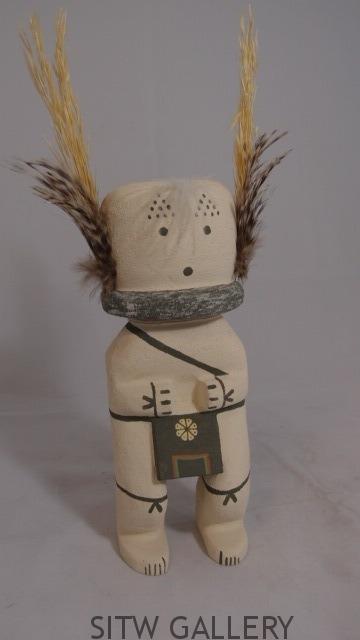
Chester Polyestewa, Susöpa Kachina

Chester Polyestewa, Susöpa Kachina

Even more wonderfully, Susöpa is also not the only insect Katsina. Dragonflies, wasps, and scorpions also have spirit counterparts. An august body of invertebrate beings! Susöpa is usually depicted carrying nothing, or sometimes a small yucca whip that he playfully hits other runners with!
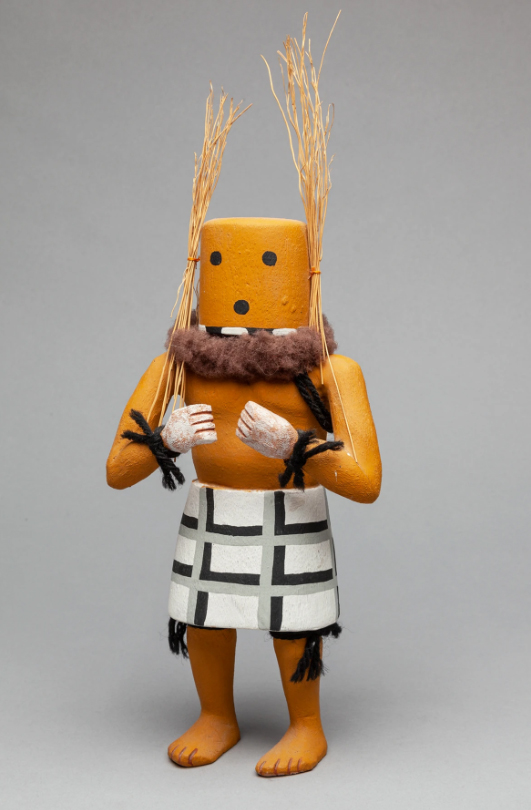
Cricket (Susopa) Kachina, c. 1970
by Arthur Yowytewa, Hopi

It is these images, of a lowly burrowing cricket that is celebrated and revered, that I shall leave you with. Because they’re simply beautiful. z end

Posted in art, insect, JD | Tagged , , , , , , | 3 Comments

More Art Inspired By Plant Swellings

A potpourri of works inspired by parasitic plant materials:

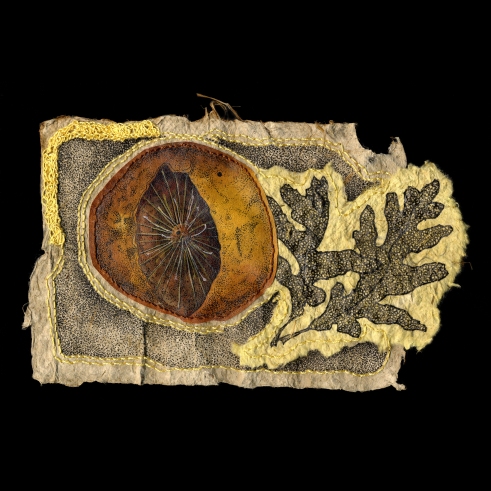
Grace Willard, Oak Gall Interior, 2006

Grace Willard, Oak Gall Interior, 2006

Of course there is one very common artwork made from oak galls, Ink! Oak gall ink (also called Iron Gall Ink) has been used for centuries as a vital component  to create indelible and intensely dark ink. Though commonly associated with medieval monks writing on vellum, many modern artists use it today. Susan Deakin envisioned the interior of a 147 year old oak tree by painting out tree rings using wasp gall ink:

Susan Deakin, Oak Tree Comtemplation, 2010

Susan Deakin, Oak Tree Contemplation, 2010 (artist at work)

Susan Deakin, Oak Tree Contemplation, 2010

Susan Deakin, Oak Tree Contemplation, 2010

There are countless recipes for making gall ink out there. Next year I hope to team up with a friend of mine who is an ink expert, and make some ourselves! z end

Posted in art | Tagged , , , , , , | 1 Comment

Cynipid Celebration!

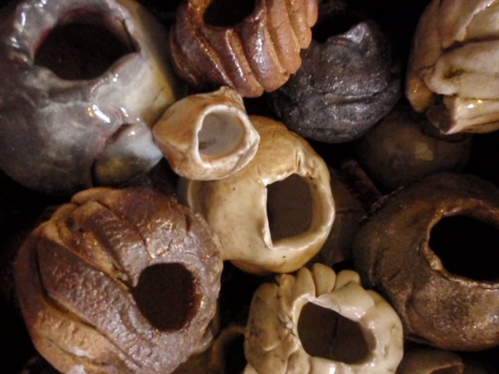
Arielle Casale, Galls, 2009

Ceramic Galls by Arielle Casale, 2009

Arielle Casale has created several hundred tiny ceramic sculptures inspired by wasp galls, and dangled them on long fishing line from above. There they hang like stars, as if the host tree they were embedded in had suddenly gone invisible, leaving the galls suspended in mid-air. Casale not only has a great Flickr set of her works, but she has gone a step further in her written proposal for the project, where she takes to task the negative perception of gall wasps, and parasitism in general.

Casale GallsCasale writes,

“It is my understanding that throughout an artist’s career, we are forced to evaluate our relationships to understand the degree at which they are symbiotic. Interactions with galleries, colleagues, instructors, students, employers etc; When we do something for another person who is involved in our field, there are a variety of instances that can occur… …Often only a matter of substantial time will reveal the either impending benefits or the clear evidence that our time has simply been wasted on an unrewarding cause.”

Symbiosis, the relationships between organisms, are often described by their named categories. If both parties benefit, it is mutualism. If only one party benefits, it is commensalism. If one organism is benefiting at the detriment of another, it is called parasitism. While those categories are still relevant, often times what scientists thought was mutualism turns out, upon closer study, to be parasitism. And some creatures termed ‘parasites’, turn out to have some measurable benefits for the host organism.

The more scrutiny a relationship receives, the more complicated and fascinating it gets! Just like any relationship, really.

Sometimes we’re the wasp, and sometimes we’re the Oak Tree. And sometimes, we’re both.

Would you believe there’s more cynipid-based art out there? Stay tuned! z end


Posted in art | Tagged , , , , , | Leave a comment

Deck the Galls

If you asked me what insect truly embodies the spirit of the holiday season, I wouldn’t hesitate for an instant. What other insect decorates trees in festive baubles, spreading joyful great glowing red ornaments and brilliant translucent spheres? That’s right, the Gall Wasp! Transforming ordinary plant matter into holiday magic!

This December I have started to create holiday ornaments for our tree that celebrate the incredible beauty and diversity of the parasitic presents these hardworking wasps leave for us to enjoy every year:

Wasp Gall Ornaments

Three of my prototype gall-ornaments nestled in our tree

Eventually I would love to make ornaments that accurately depict actual species. Right now these are generic ideas, Made with paper mache, ping pong balls, and old jewelry. The lower two are translucent, making them ideal for LED illumination at night.  (The zingerone and capsaicin molecule ornaments are from Made With Molecules.)

White Oak Gall Wasp

Cynipidae: Spreading holiday cheer  and warped plant tissue.

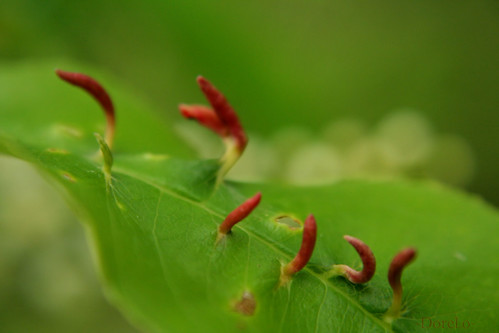
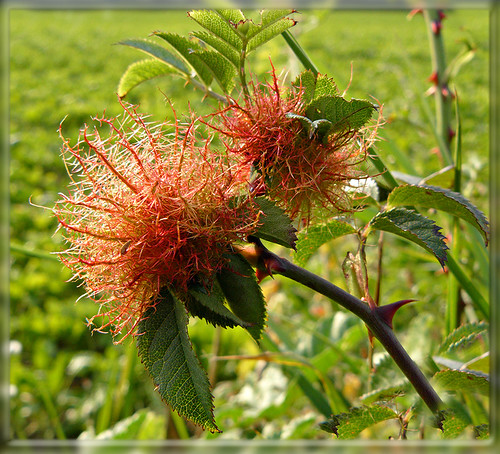
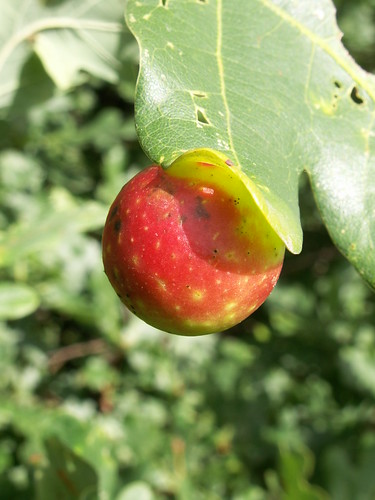
Galls are formed by plants  in response to invasive lifeforms, such as wasps, flies, and mites. When the insect lays its eggs into the plant tissue, chemicals are released that cause the host tissue to swell up, conveniently forming storehouses of food, as well as protection from both weather and predation. Though other insects and invertebrates can create galls, the most insane-looking ones are the result of tiny wasps known as cynipids. These delicate creatures inject chemicals that cause the plant tissue to swell into unreal structures of incredible diversity. For one species of tree there can be hundreds of species of gall wasps that parasitize specific structures and tissues.

After a few months to a year developing inside, the mature wasp chews its way out, leaving a tiny hole, ready to mate (or not: some wasps produce all-female parthenogenic offspring) and make more beautiful galls to fill our trees with delight.

Here is just a sample of some of my favorite kinds, found in the beautiful Plant Gall Flickr Pool.

Galls by I,DL

Plant tissue + Wasp potion = magic. photo  by ‘I,DL’

Robin's Pin Cusion by Colin Cubitt

Those bright alien flowery things? Those are galls, my friend. Photo by Colin Cubitt

Cherry Gall on Oak, by Ashley Wood

Festive Cherry Gall on Oak, by Ashley Wood

A handy page at Boing Boing also celebrates galls in all their sculptural glory.

The exact processes, chemicals, and interactions in which gall-forming insects cause tissue to form these structures is under intense study as entomologists tease out the complicated relationship between insect and plant. Personally I would love to one day have the ability to plant a tree, inject some wasp-hormone into the trunk, and watch it warp and twist until it became a cozy artist’s studio.

Next post I’ll share some more gall-oriented artwork! z end

Posted in insect, JD | Tagged , , , , , | 5 Comments

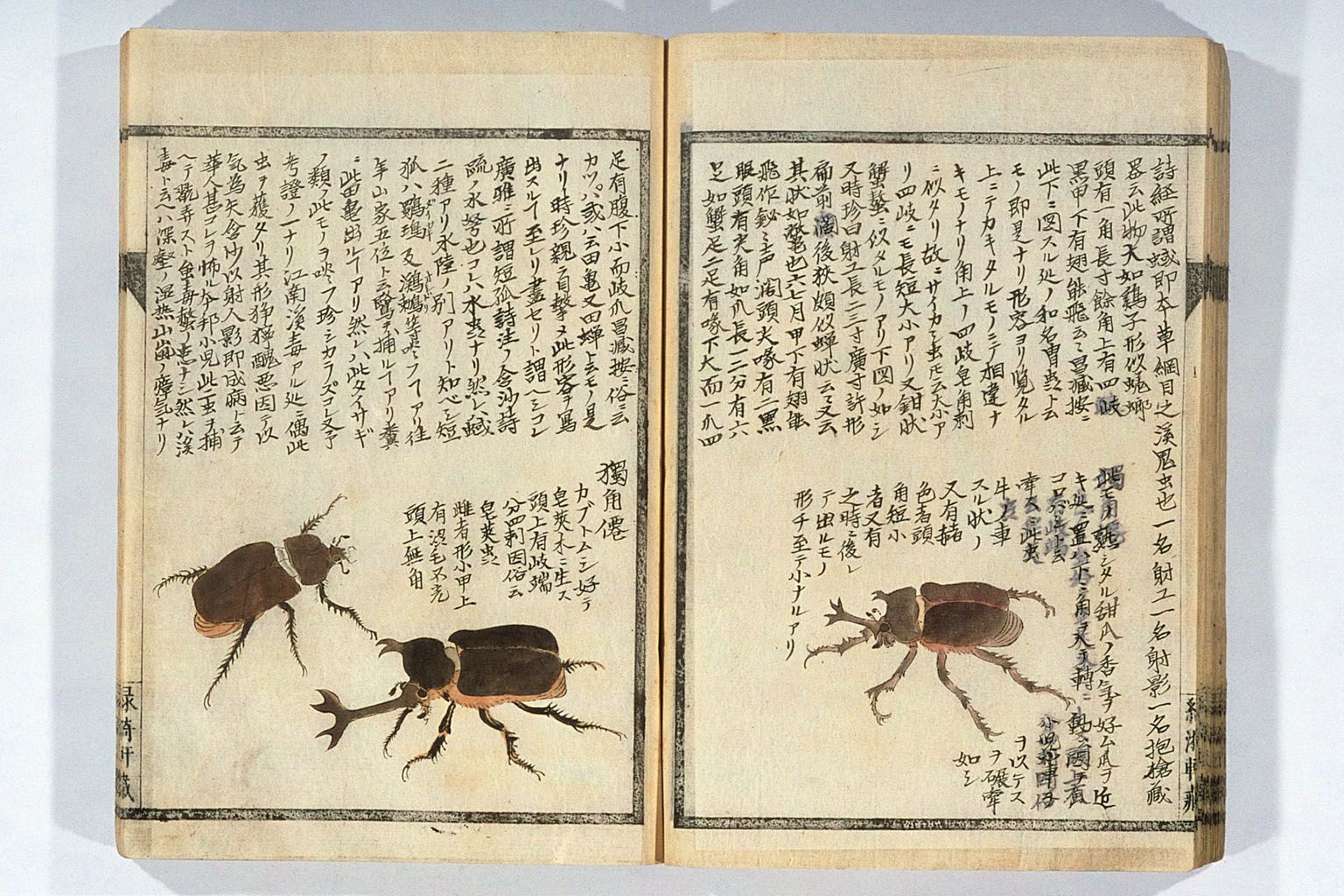
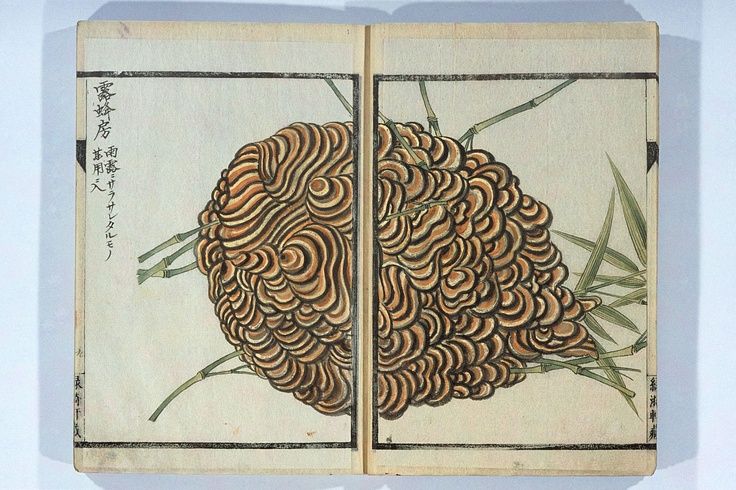
The Insect Art of Kurimoto Tanshū

Senchufu cover

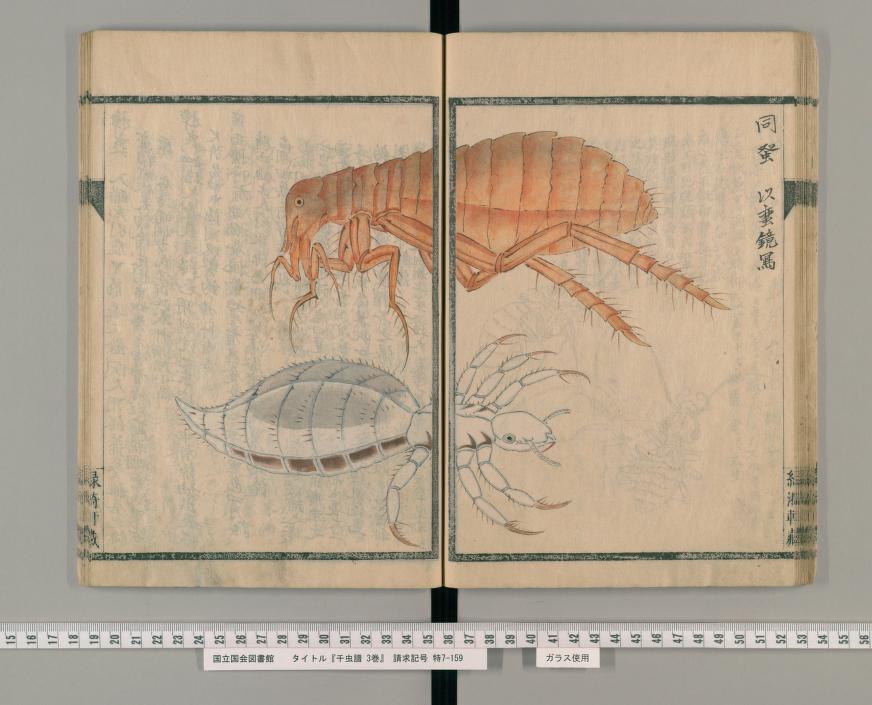
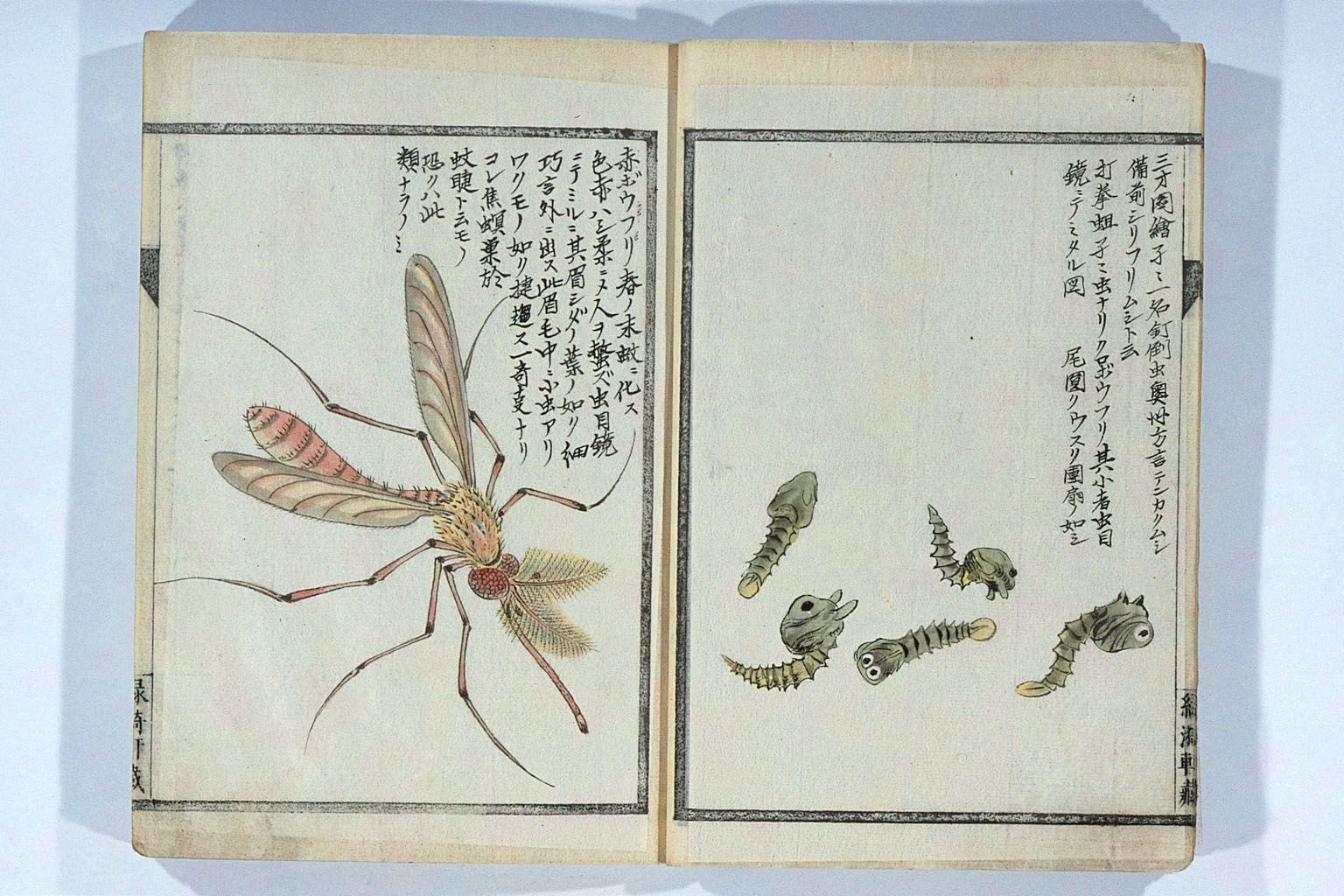
The 19th century court physician Kurimoto Tanshu (栗本丹洲) (also known as Kurimoto Masayoshi) was also an accomplished naturalist, and in 1811 compiled the beautiful 3-volume work entitled Senchu-fû, which roughly translates as the Thousand Insects Manuscript. Its pages are packed with detailed illustrations of insects, arachnids, crustaceans, and just about every invertebrate that was known in Japan, along with a healthy amount of amphibians, fish, and other biological curiosities.  This whole work is worth taking a look, and not least for the glorious parasite centerfold pics!

In 1826 Kurimoto teamed up with the influential physician and naturalist Philipp Franz von Siebold, and shared his illustrations and observations of crustaceans and invertebrates with Dutch naturalists. The resulting work, Fauna Japonica, was the first European work detailing the wildlife of Japan.  While Kurimoto’s illustrations may not be as scientifically accurate, they are beautiful compositions of information and observation, every one.

The images come from the incredible digital archives at the National Diet Library of Japan. The entire danged three-volume collection of Senchu-fû can be viewed here. Even if you don’t can’t read Japanese it’s worth the trip.z end

Posted in art, literature | Tagged , , , , , , , , | 2 Comments

Bethany Krull and the Surrogate World

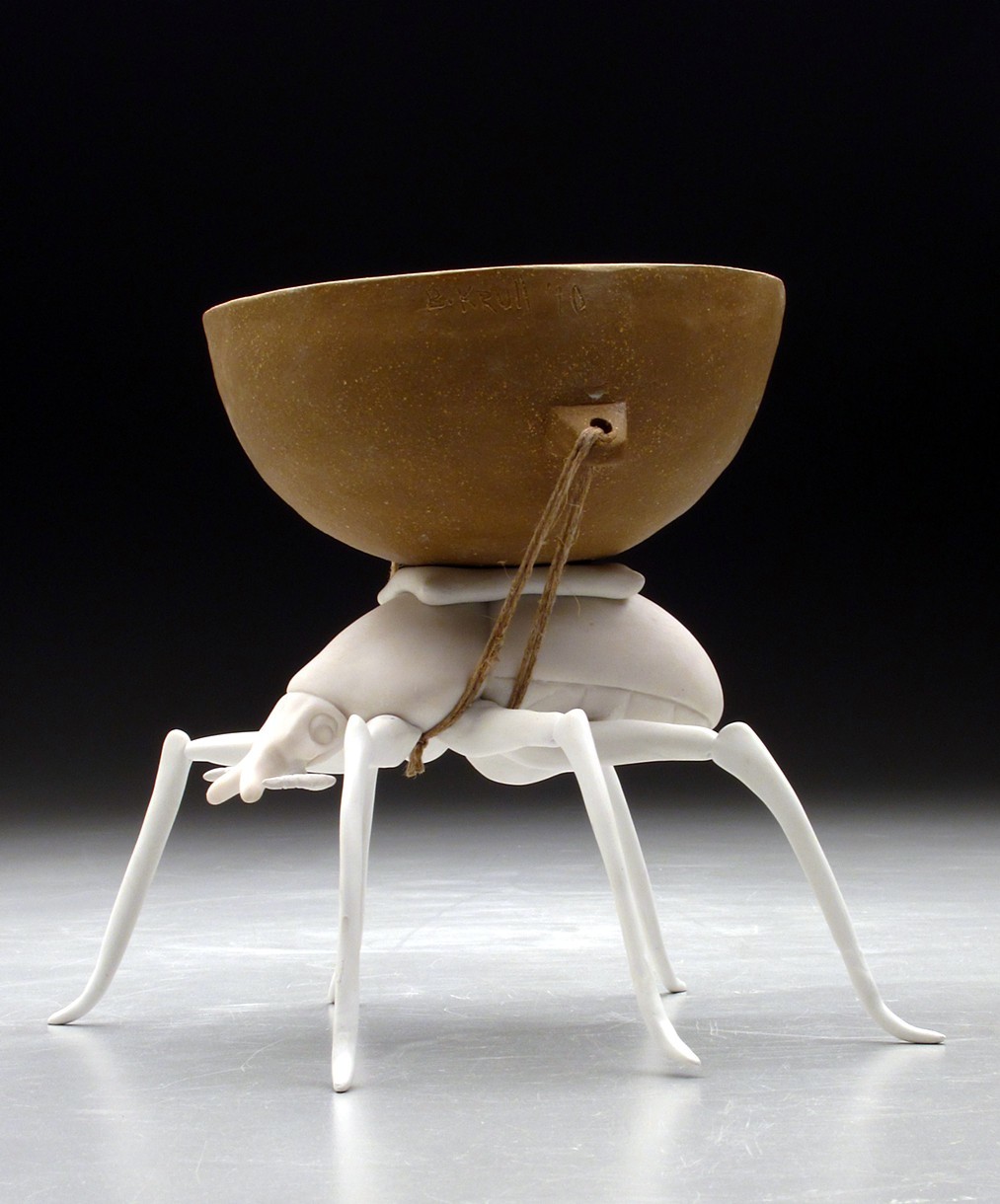
Bethany Krull, Exile, 2010

Bethany Krull, Starter Pet Adaptation 2010

There’s so much good stuff about Sculptor Bethany Krull’s works that I will have to restrain myself from displaying them all.  Krull’s seeds, insects, and invertebrates are more than just a celebration of the beautiful forms found in nature, but also a sometimes unflinching look at humanity’s engagement with other life forms we share our space with, and how casually we alter their existence.

Bethany Krull, In Servitude, 2010

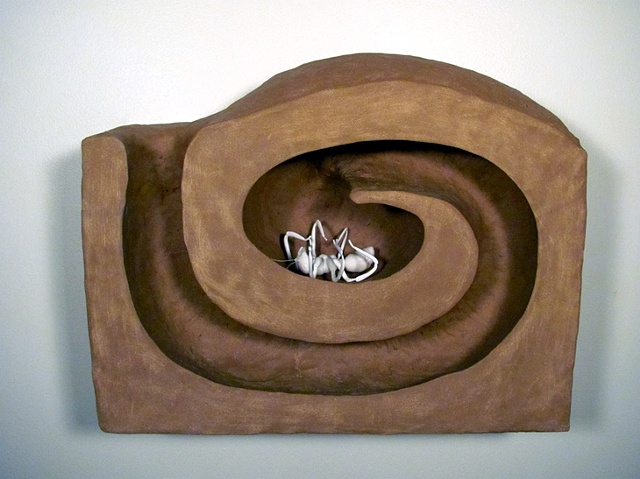
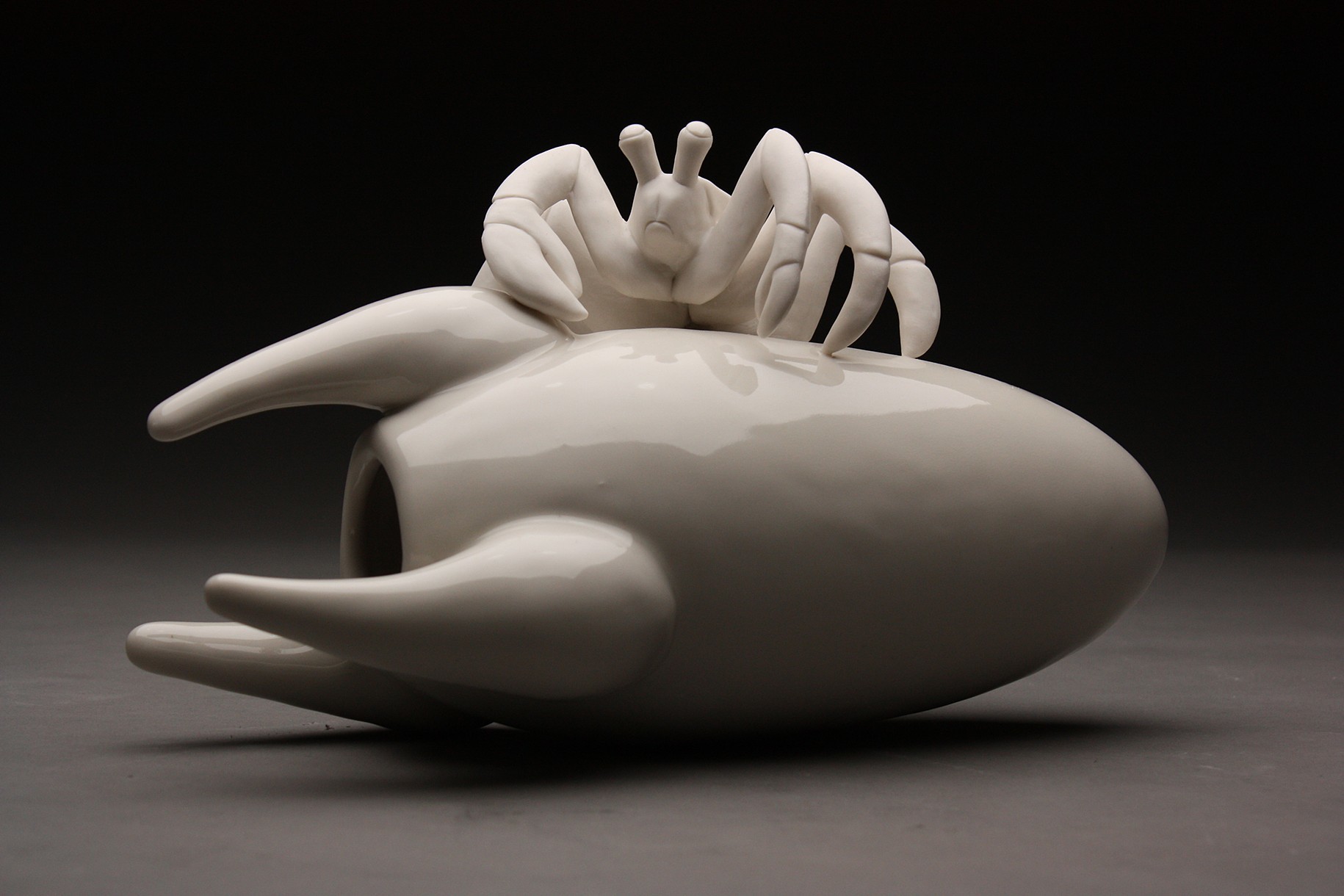
Her most recent body of work is called Dominance and Affection, combining captivity, domesticity, and isolation from the natural world in a series of stark works in porcelain, wood, and bronze. Beetles are turned into beasts of burden, Mice and monkeys clutch to surrogate mothers of cloth and wire, and desperately lonely hermit crabs huddle in endearingly appointed man-made shells.

Bethany Krull, Cricket Death Match, 2010

While using shackled parrots and caged cats may tug at the heartstrings of many people who are attracted to the possible plights of our dear pets, it is the prevalent use of invertebrates that is most affecting. Hermit crabs are callously termed ‘starter pets’ by the pet industry, and are viewed as disposable. Crickets, bred for centuries in Asia as pets, chirp mournfully in cages, and are forced to fight, much like roosters, in arenas. Is their plight any less tragic than chickens? At what phylogenetic distance does our empathy for animals decay? In Krull’s works, that long rope is yanked short by her endearing portrayals of spiders, wasps, and beetles. Realized in glowing white porcelain, they take on a nearly cuddly appearance while losing none of their anatomy or their pathos.

“We have turned wild animals into companions, genetically sculpting them into sweeter, cuter, less dangerous versions of themselves,” Krull states,  “We shower our pets with love at the same time we cage and contain them and it is this affection contradicting complete control that I am interested in illustrating in my work. For no amount of love lavished upon these creatures will erase the fact that the success of the relationship lies in our complete domination over all aspects of their existence.”

Bethany Krull, Manifestations of Nature, 2009

Bethany Krull, Manifestations of Nature, 2009

For the naturalist, this paradox hits home sharply.  Almost any lover of nature and its creatures has at one point in time captured and kept an animal. I myself remember fondly the first hermit crabs I cared for as a child, and observing them surely helped kindle within me a fascination for the invertebrate world. They lived out their fascinating lives, however, far from their seashore home, with no chance to return. Krull’s strong works remind me of Bertram Chandler’s 1963 short story, “The Cage”, where a group of stranded astronauts are captured and put into a zoo by non-humanoid aliens.  The humans finally demonstrate their sentience to their captors in an unsettling way, they themselves trap and keep a small mouse.  “Only rational beings,” said the alien,  “put other beings in cages.”  z end

Posted in art | Tagged , , , , , | Leave a comment

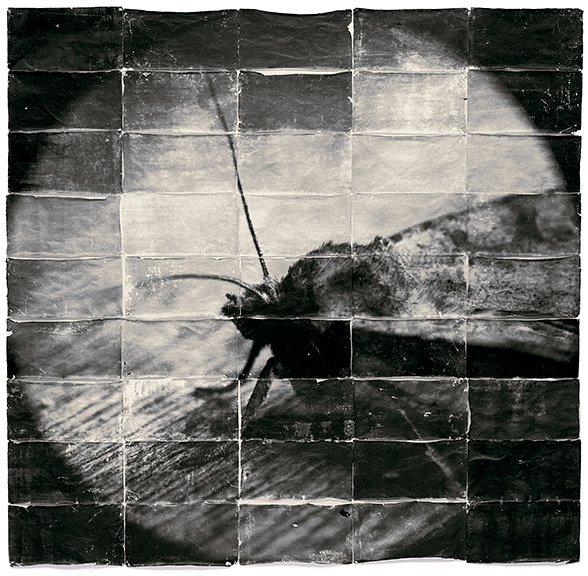
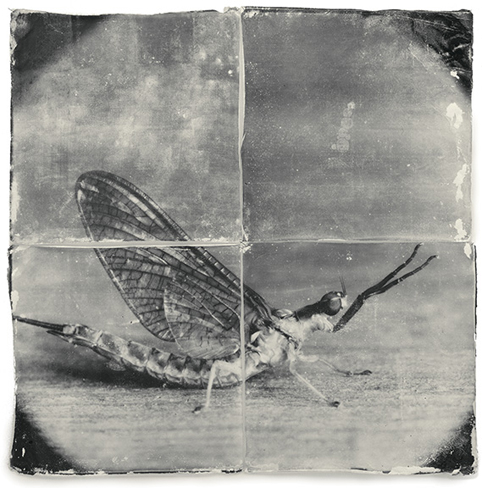
Attracted To Light

Starn Attracted 3

Starn Attracted to light 2

Starn Attracted to light 1

Starn Attracted to light 4

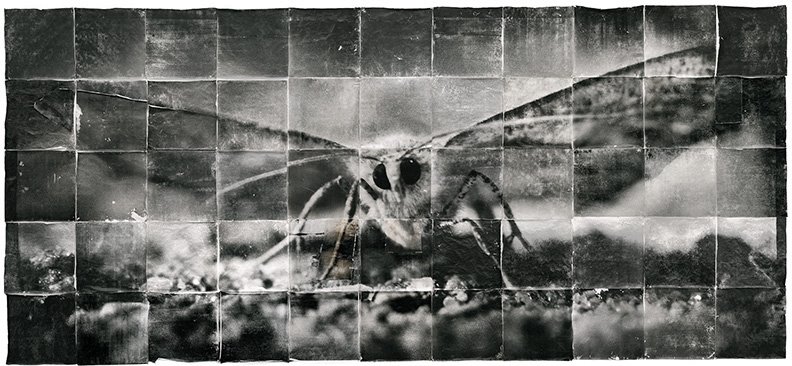
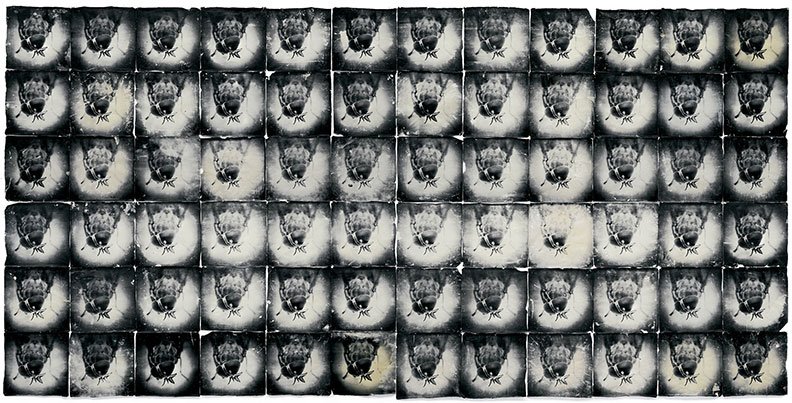
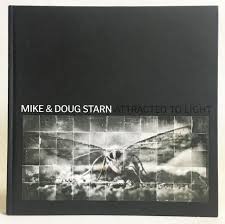
The above pictures are part of a glorious item that I would love to have clutched between my tarsal claws. It is a grand art book called “Attracted To Light“, by Mike and Doug Starn. It’s full of moths, of course (with the occasional mayfly), and the photographs within are almost like moths themselves. They are furtive and fragile artifacts, with flecks of emulsion coming off in drifts like the scales of their subject’s wings. Cleverly, in reference to the main food source of the silk moth, many of the photographs are printed on multiple sheets of mulberry paper.

The book is out of print, but I have put this on my Eventually I’ll Get It Somehow List.  The twin brothers Starn worked closely together out of their studio in New York to create this collection that celebrates an often-overlooked insect. The images are accompanied by texts from literary lepidopterists such as Vladomir Nabokov and Viktor Pelevin. I recommend leafing through their gallery (direct link here) to see more of their beautiful insect works. z end

Posted in art, literature | Tagged , , , | Leave a comment

Next Instar

And we’re back up! (whew) Thanks to the kind support of the folks at DreamHost, The Endless-Swarm now has more robust behind-the-scenes blog tools.

Once our wings have hardened, and we’ll be ready to fly!

Posted in JD | Tagged , | Leave a comment

Swarm Reboot


This blog was created on a whim by using Dreamhost’s one-click installer. However, though it’s been an easy ride, I am starting to really enjoy insect-blogging, and want to get under the hood a bit more. To do that I need to *gulp* delete this blog, then reinstall it with a new type of custom install.

So this blog may be down for a day or two!

Apparently you can “export” the whole blog onto an XML file, then re-install the whole beast into its new site. So other than commenters perhaps having to re-set their passwords, there shouldn’t be much of a change. We Shall See.

Super nervous about anthing that says “DELETE BLOG”, however.

Here goes something…

Posted in Uncategorized | Tagged | Leave a comment

Biophilia

Vladimir Stankovic, Entomologist’s Wish, 2011

Fantastic insects and other organisms populate Finnish artist Vladimir Stankovic’s Biophilia series of works, created in color pencils and digital tools.

Posted in art | Tagged | Leave a comment